
Vacation Planning Tips That Actually Work: A Step-by-Step Guide
You want nothing more than to take a break from life and head out on vacation, but you can’t make heads or tails of everything you need to do – picking a destination, finding hotels and activities, planning out your itinerary – it’s just starting to feel more like work than a break. What started as a hopeful idea to plan a fun family vacation now feels like a full-time job, and you don’t know where to start. As a travel-loving mom of three who has planned over 30 trips with kids in tow, I’ve been there. And after planning countless family vacations (some more chaotic than others), I created a method to streamline and simplify the process. It’s called the TRIPS Method, and it’s full of practical, time-saving vacation planning tips you can actually use. You’ll learn how to simplify destination choices, skip decision fatigue, and create a realistic itinerary (with a lot less stress!). Whether you’re brand new to trip planning or just tired of spinning your wheels, these steps will help you feel more confident, more organized, and way less stressed.
Why You Need the TRIPS Method
Let’s clarify something from the get-go: you don’t need a huge budget, unlimited PTO, or a ton of free time to travel well. That’s probably not your reality. You’re juggling carpools, work deadlines, picky eaters, school calendars, and a budget that doesn’t magically stretch just because it’s summer break. According to a 2024 report from Priceline, the average traveler spends between 16 and 20 hours just researching and planning a single trip—and very few of us have that kind of time.
What you really need is a planning process that:
- Respects your time
- Helps you make decisions faster
- Keeps your family’s real needs front and center
That’s exactly why I created the TRIPS Method: a practical, repeatable framework for planning trips without overwhelm.
TRIPS Method Step 1: Think It Through
This is where every great trip begins—not with a destination, but with intention. What is the one thing you want to accomplish by the time you get home? What would make it worth the time, money, and effort to plan?
Get Clear on Your Purpose
Before you do any logistical planning, you need to have a clear purpose. Is this a reset trip? A family reunion? A chance to knock a national park off your bucket list? Your purpose should guide your decisions—not just your destination, but your budget, itinerary, and even your packing list.
And you don’t have to have a new purpose every trip. Almost always, my purpose is to connect with my family. If that is the only thing that happens, then it will be worth it. I then supplement the purpose with a few other goals or ideas that also guide the trip. But when things go sideways, holding onto that purpose makes all the difference.
Want to go more in depth with purposeful travel?
Check out this post: Travel With a Purpose
Set Goals That Match Your Purpose
You don’t need to “see it all” or “do it right.” I start by setting one or two realistic and measurable goals for my trip that support the overall purpose. It might be to put my phone away once we get to the hotel. Or work in 5-10 minute one-on-one time with each kid during the trip. These are goals that are in my control, regardless of weather, budget, closures, etc.
Compare Destinations With Purpose
Don’t just go where everyone else is going. Or maybe, do! But before you jump on the latest trendy vacation spot, consider your boundaries: schedules, budget, interests, and ages. Each family will be different, and I can absolutely tell you that while a summer in Paris can be magical, so can a camping trip or staycation.
For a deep dive into choosing a destination, read my post here:
Picking the Best Family Vacation Spot
Don’t Ignore Your Budget
There are entire blogs dedicated to travel budgeting (I’ve written a few myself—linked below), so this section is just going to scratch the surface. But here’s the big truth up front:
Never go into debt for travel.
That’s not empowering, and it won’t make the trip more meaningful.
But also, if travel matters to you, it deserves a place in your budget.
Not as a splurge. Not as an afterthought. As a real category in your family’s spending plan.
Budget is part of Step 1 because getting clear on your financial comfort zone early on shapes every other planning decision. From how far you’ll go to what kind of accommodations you’ll choose, your budget helps you plan with clarity (not guesswork).
Here are a few tips to get started:
✅ Estimate your all-in costs
Think beyond flights and hotels. Include food, transportation, activities, tips, airport snacks, gear, and souvenirs. Even a rough estimate gives you something to work with—and prevents sticker shock later.
✅ Choose your spending comfort zone
There’s a big difference between what something costs and what you’re comfortable spending. Set a top-line amount and work backwards from there. It’s okay to scale back or adjust the destination to match your number.
✅ Start saving early—even small amounts
You don’t need a fancy savings plan to get started. Automate $20 a week into a travel savings account, and you’ll have over $1,000 in a year. That’s a multi-day hotel stay, a flight, or a big chunk of your family’s trip right there.
✅ Know when to spend vs. save
Sometimes you should splurge, like when it means better sleep or a safer location. And sometimes you can save big without sacrificing the experience—like by booking with points, cooking a few meals in, or choosing off-peak travel dates.
Want more practical, real-life help with your travel budget? Start here:
TRIPS Method Step 2: Reserve with Confidence
Booking the major pieces of your trip shouldn’t feel like guesswork. This step focuses on flights, lodging, transportation, and activities, without the overwhelm and second-guessing.
Flights: Know When and How to Book
The first thing is to have the right tools. I always start my flight searches with Google Flights. It has robust filters as well as helpful tools to find the best deals.
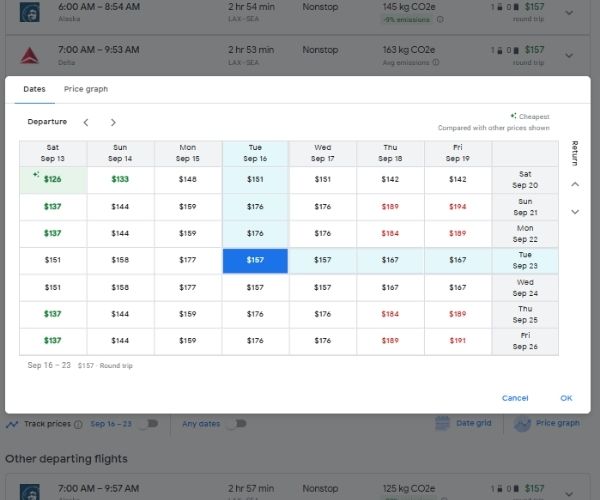
Do not sleep on the price tracking feature, which is especially helpful if you’re planning several months (4+) ahead. For more options and possibly cheaper prices, consider smaller airports nearby and weigh the value of direct vs. connecting flights.
Many others love the metasearch site Skyscanner to do their flight research. I’m not as familiar with it, but it is widely used.
I almost always recommend doing the research via Google Flights (or Skyscanner), but booking directly with the airline and not a third party. And to make sure you aren’t nickel and dimed later, make sure to check the baggage, seating, and in-flight meal options or add-ons before you book.
Lodging: Match Your Stay to Your Needs
Choosing a place to stay sounds simple—until you start comparing dozens of options with wildly different prices, layouts, and amenities. Approach your research with a clear sense of your family’s needs and non-negotiables.
Here are some key things to consider:
- How many beds or bedrooms do you actually need? Look closely at the room layout. If you have younger kids who will go to sleep earlier, look for locations with an extra bedroom or a living space where the others can hang out.
- Do you need access to a kitchen, fridge, or laundry? For longer trips or picky eaters, having the option to cook or reheat leftovers can save both money and meltdowns. And if you are packing light to save money on luggage, laundry access is a game-changer.
- Is the location walkable or close to your planned activities? A cheaper hotel 20 minutes away might not actually save you money once you add in parking, gas, or stress.
Use OTAs and Metasearch Sites to Compare Options
If you’ve never heard the term “OTA” before, don’t worry—it stands for Online Travel Agency, and it’s just a fancy way of describing booking platforms like:
These platforms are helpful because they let you compare options across multiple hotels, properties, and price points all in one place. Most allow you to filter for family amenities (like cribs, kitchens, or multiple rooms), read reviews, and see photos. You’ll also get a better sense of the going rate for lodging in your destination, so even if you don’t book through an OTA, you’re making an informed decision.
There are also popular metasearch sites that basically search all the OTAs and booking sites and help you find the best deals from all these sites. They make their money through advertisements, not bookings. Popular metasearch sites include:
💡 Pro Tip: Sometimes it’s worth using OTAs for research, then booking directly through the hotel or host if they offer better pricing, cancellation terms, or loyalty perks.
Related reading: Finding a Place to Stay: The Ultimate Guide
Activities + Reservations: Leave Room for Breathing
Yes, book your headliners—but don’t overload your days. I recommend anchoring each day with one key activity and leaving the rest flexible. Sometimes the unscheduled moments are the most memorable.
What to Reserve in Advance
While some activities can be booked on the fly, others really do need a reservation, especially for popular destinations or peak travel times. Here are the ones to prioritize:
- Timed entry or ticketed access (e.g., national parks, museums, exhibits)
- Tours and guided experiences with limited capacity
- Sporting events, theater performances, or concerts
- Dining reservations at themed or limited-seating restaurants
- Special events, experiences, or holiday celebrations
- Transportation that can sell out, like ferries, scenic train rides, or shuttles
If something is a must-do for your trip, don’t wait—book it as early as you can. Then build the rest of your day around it.
✅ Know the Policies + Be Strategic
Before you hit that “book now” button, take a minute to check the cancellation and refund policy. Can you cancel or modify? Will you lose the full cost if something changes? If plans are still coming together, look for flexible booking options or free cancellation windows.
Some experiences offer day-of or last-minute tickets, but these aren’t always guaranteed, especially during school breaks or summer travel. For larger families, it can be especially hard to find:
- Last-minute tickets for the entire group
- Seating assignments together (for shows or transportation)
- Enough availability on tours with limited group sizes
Planning ahead helps avoid disappointment and gives you more control over your schedule. If it’s an activity that would be fun, but not crucial, waiting until the last minute might save you quite a bit.
Want Help Planning Activities That Actually Work for Your Family?
Everything in this post is part of a simple, step-by-step method I’ve used to plan dozens of family trips—and now I teach it inside Family Travel Made Easy. It includes printable planning tools, templates, and tips that help you confidently plan trips without decision fatigue or overwhelm.
Step 3: Itinerary That Works for Real Life
I love a color-coded spreadsheet as much as the next planning nerd, but you’re on vacation, not at boot camp. The goal isn’t to script every minute. It’s to create a flexible outline that gives your family structure without suffocation.
Because let’s be honest, life with kids rarely goes exactly according to plan.
Build a Framework (Not a Script)
The type of itinerary you create will depend on your trip’s purpose, your destination, and the personalities of your family. But no matter where you’re going, most families do best with a layered approach that leaves room for both structure and spontaneity:
- Overview Itinerary: Start with a high-level view—travel days, hotel check-ins, and anchor activities. This is your bird’s-eye snapshot of the week.
- Day-at-a-Glance: Break each day into three natural chunks: morning, afternoon, evening. Pencil in your main activity and leave space around it. This keeps your schedule realistic and helps avoid overpacking your days.
- Details Section: Keep important info handy—confirmation numbers, addresses, reservation times, and parking notes. Whether it’s a printed sheet or saved in your phone, this section saves mental energy when you’re on the go.
This approach gives you enough structure to stay organized, but enough breathing room to go off-script when the opportunity strikes. If you like scheduling your time out hour by hour (hi, it’s me, I’m the one who likes to do this), just make sure to schedule lots of wiggle room.
Use Tools That Make Life Easier
Stop writing your travel plans on the back of a scratch piece of paper.
Your itinerary doesn’t have to be fancy, but it does need to live somewhere consistent. Where you can store your confirmations, brainstorm ideas, estimate expenses, and map out your trip. Whether you prefer digital tools or printable templates, the right tool is the one you’ll actually use.
Here are a few options to consider:
Wanderlog
All-in-One Trip Planner
Wanderlog centralizes your itinerary, maps, budgets, and confirmations into a single platform, making it ideal for organized travelers juggling complex plans.
Recommended for:
Travelers who want everything in one place and are comfortable with learning new tools.
Google Drive
Low-Tech Simplicity
Google Drive tools are easy to access and share, perfect if you prefer flexibility and minimal setup.
Recommended for:
Those who want full control without needing to learn a new platform.
Trip It
Custom Post Types
TripIt automatically organizes your forwarded travel confirmations, keeping all booking details in one tidy place.
Recommended for:
Travelers who care most about keeping flights, hotels, and reservations organized.
Canva
Creative, Printable Itineraries
Canva lets you design beautiful, printable travel plans from scratch or from a template.
Recommended for:
Visual planners who prefer something tangible or like to customize their own layouts.
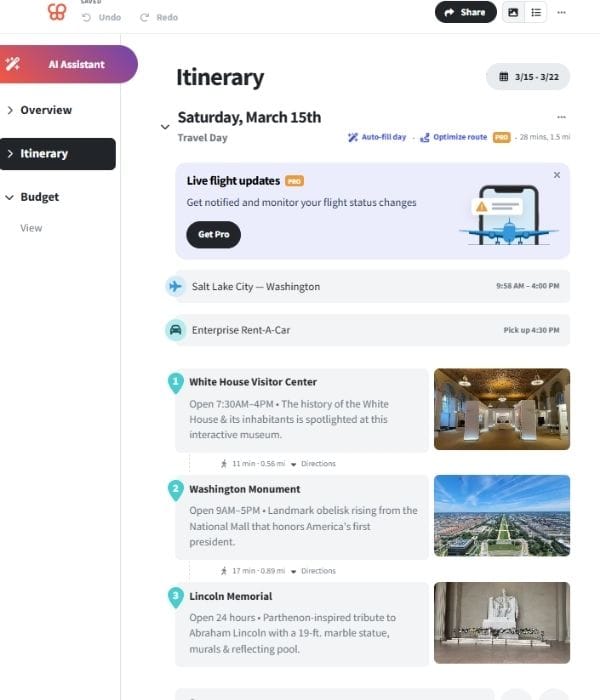
No matter which method you choose, make sure it gives you quick access to:
- Your big-picture travel plan
- Your must-have confirmation info
- A spot to jot down ideas, last-minute changes, or a list of backup options
There’s no gold star for using a particular app. The real win is having everything in one place—and not relying on memory or your inbox when you’re juggling three kids, two carry-on bags, and trying to find your rental car.
For a more in-depth walkthrough of creating a specific itinerary, check out this post: How to Create a Vacation Itinerary.
Step 4: Prep and Pack with Less Stress
This is the step where most people start panicking—and overpacking. But with a few systems and some realistic vacation prep, you can eliminate the guesswork (and the meltdown over forgotten swim goggles).
Instead of scrambling the night before, give yourself a head start about ten days to two weeks before leaving. It doesn’t need to be complicated. Just break things up into bite-sized tasks like doing laundry early, setting aside “trip-only” clothes, and using a checklist to track what’s packed. A little structure now saves you from chaos later.
Prep a “First Night Easy Access” Strategy
This simple trick can save your sanity after a long day of travel:
Pack one cube or section of your suitcase with first-night essentials—PJs, toothbrushes, a change of clothes, chargers, and anything your family will need right away. That way, you’re not digging through everything at bedtime – just grab the one cube and have everything you need.
This is especially helpful when arriving late at night with tired kids (and parents).
Know What Luggage to Use
While I tend to be team carry-on, there are many components to consider when choosing which luggage to take. Consider the following.
✈️ Carry-On Only
- Skip baggage claim and move quickly through airports
- Great for short trips or when kids are old enough to be in charge of their own bag
- Stick to airline size limits and avoid being embarrassed when trying to stuff it in the overhead bin
🧳 Checked Bags
- Ideal for bulky items, multiple kids, or mixed-weather destinations
- Often cheaper to check one big bag than to pay for several small carry-ons if there are baggage fees
- Always keep essentials (a day’s worth of clothes, meds, chargers) in your personal item, just in case
Real-Life Reminder: It’s Okay If You Forget Something
If you forget a toothbrush or a pair of socks, it’s not the end of the world.
Packing doesn’t have to be perfect—it just needs to be thoughtful enough to make the rest of your trip smoother. Done is better than perfect. And even following part of this system will put you ahead of the game.
Step 5: Survey and Streamline
Most people skip this, but it’s one of the most powerful steps you can take. Reflection turns a one-time trip into a blueprint for better vacations.
You already put in the work to plan and take the trip. Now it’s time to learn from it, so future travel feels even smoother.
What Worked? What Didn’t?
Take 10 minutes after your trip (right after starting that first load of laundry) to jot down a few quick notes:
- What you’d absolutely repeat
- What didn’t go as planned (and why)
- What you packed but never used
- What you forgot but wish you’d had
- Any tips or surprises you’d want to remember next time
This doesn’t need to be fancy—just open a doc or write it in your planner.
Get the Whole Family Involved
Ask each family member:
- “What was your favorite part?”
- “What’s something you’d change next time?”
You’ll get valuable insight and include your kids in the process, which builds excitement for the next trip.
Save and Store Your Notes
Drop your notes into your travel folder or trip planning app. That way, you’re not starting from scratch next time. You’re building on what you’ve already learned, even if you are traveling to a different destination.
Travel Planning Help for Busy Families
You don’t need to be a logistics wizard. You don’t need to spend hours Googling every little detail. What you need is a framework, a few reliable tools, and someone in your corner who gets how much work it really is to plan a “simple” vacation.
That’s exactly why I created Family Travel Made Easy—a membership designed to help moms plan trips with less stress, more confidence, and a whole lot less Googling.
Inside the membership, you get:
- A full-length course built around the TRIPS Method
- A printable travel planning workbook
- Access to our Travel Toolkit with trusted travel planning resources
- Monthly coaching, printable travel activities for your kids, and more
Whether you’re planning your first big family trip or just trying to make your next one smoother, this membership will save you time, energy, and mental bandwidth.
👉 Want real travel planning help that actually works for busy families? Join Family Travel Made Easy today.
Final Thoughts: Start Where You Are
You don’t have to plan the “perfect” vacation. You don’t need a massive budget or months of free time. You just need a few solid vacation planning tips, a system you can trust, and the confidence to take the next right step.
So wherever your next trip takes you, remember: progress beats perfection.
And you don’t have to do it alone.
Happy Travels!